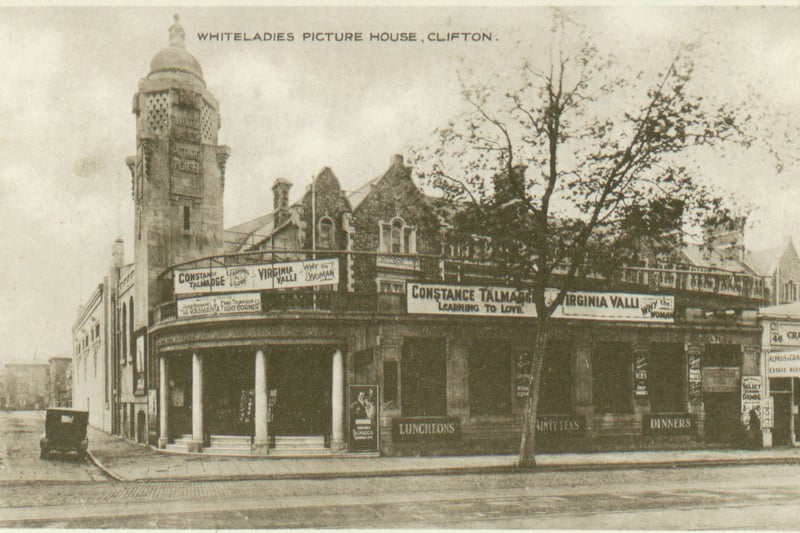
The construction of Whiteladies Picture House commenced in the year 1920 and was completed in 1921. The eminent architects James Henry LaTrobe and Thomas Harry Weston (1870-1923) were responsible for designing and building the structure. The grand opening ceremony was held on 29th November 1921, which was graced by the distinguished presence of the Duchess of Beaufort. This exquisite cinema house has witnessed several ups and downs over the years, yet remains a lustrous gem in the history of Bristol’s entertainment industry.
Whiteladies Picture House, being a part of the ABC chain, was eventually acquired by Odeon through a merger facilitated by the private equity firm Cinven. Due to the presence of another Odeon cinema in close proximity, the owners made the difficult decision to shut down and sell Whiteladies Picture House in 2001. However, the sale came with a legal impediment – a restrictive covenant that specifically forbade any future use of the establishment as a cinema. This was a significant blow to the cultural landscape of Bristol, as the Whiteladies had been a beloved institution for over eight decades, attracting a loyal following through its various reincarnations.
The Whiteladies Picture House, with its magnificent architecture and rich history, has been honoured with a grade II listing by English Heritage, signifying its significant cultural and heritage value. The front section of the building has since been transformed into a delightful restaurant, preserving some of the original features and charm of the Whiteladies Picture House. The banquet hall and balcony, which once hosted grand screenings and stage performances, have also been converted into a unique event space, providing a one-of-a-kind experience for visitors.
In an effort to revive and restore the cherished cultural institution that was the Whiteladies Picture House, a not-for-profit company was established by Alan Mandel Butler and David Fells in November 2010. The company, named Whiteladies Picture House Ltd, was dedicated to resuscitating the spirit of the iconic cinema house that had played a monumental role in Bristol’s entertainment history for over 80 years.
Whiteladies Picture House Ltd embarked on an ambitious mission to acquire the establishment from its owners, Odeon, and overturn the restrictive covenant that had prohibited its use as a cinema. With the support of local residents and cinema enthusiasts, the company successfully raised the funds required to purchase the building and commence the legal battle to dissolve the covenant. The campaign to restore the Whiteladies Picture House to its former glory garnered widespread attention and acclaim from the media and the public alike.
Through a combination of meticulous restoration and innovative adaptation, Whiteladies Picture House Ltd transformed the building into a vibrant hub for cultural and community events. The original features and character of the architecture were carefully preserved, while new facilities were added to enable a diverse range of activities. The former banquet hall and balcony, once the scene of grand screenings and performances, now serve as a unique event space accommodating weddings, conferences, and other functions.
Whiteladies Picture House Ltd’s unwavering commitment to preserving Bristol’s cultural heritage and providing a welcoming and inclusive space for the community has ensured that the legacy of the Whiteladies Picture House lives on. The not-for-profit company has breathed new life into the iconic building, paving the way for its continued relevance and importance in the city’s cultural landscape.
Whiteladies Picture House is currently operated by Everyman Cinema. Everyman Cinema continues to honour the legacy of Whiteladies Picture House with its commitment to providing a unique and memorable cinematic experience that pays tribute to the establishment’s illustrious history.
Despite the challenges and hurdles that the Whiteladies Picture House has faced over the years, its remarkable legacy endures, keeping alive the memory of a bygone era in Bristol’s entertainment industry.