You’ve probably watched a film in a beautiful old cinema and wondered how the place is still standing. The truth is, it takes years of careful restoration, skilled projectionists, and a great deal of behind-the-scenes maintenance to make it happen.
We’re the Whiteladies Picture House, a cinema on Clifton’s Whiteladies Road that has been showing films since 1921. Running a building this old has taught us what it really takes to keep a historic venue alive, and we’re far from the only ones doing this work. Historic theatres across the UK and the US face similar challenges, and much of the effort involved goes unnoticed.
So we wrote this guide to change that. You’ll learn what cinema restoration actually involves, how we care for archival film prints, why projection skills are disappearing, and how audiences like you can help keep these venues standing for future generations.
Let’s dive right in!
What Cinema Restoration Actually Involves
Cinema restoration is the process of repairing, preserving, and upgrading historic theatre buildings so they can keep showing films safely. If you’ve ever visited a venue built before the 1950s, you’ve likely benefited from this kind of work without realising it.
Simply put, restoration can be broken down into three main areas: structural repairs, aesthetic preservation, and technical upgrades.
Structural work means fixing foundations, roofs, and load-bearing walls. Aesthetic preservation focuses on original features like decorative plasterwork and vintage light fittings. And technical upgrades involve installing modern projection and sound equipment without ruining the building’s character.
Now the tricky part is balancing all of this with modern fire safety and accessibility codes. Specialists have to keep the original features intact while making sure the building meets today’s legal requirements, and that’s no small task.
Because of this complexity, these projects can stretch on for years. They require craftspeople who understand pre-war building techniques, and those skills are increasingly rare.
The Art of Film Restoration and Archival Care
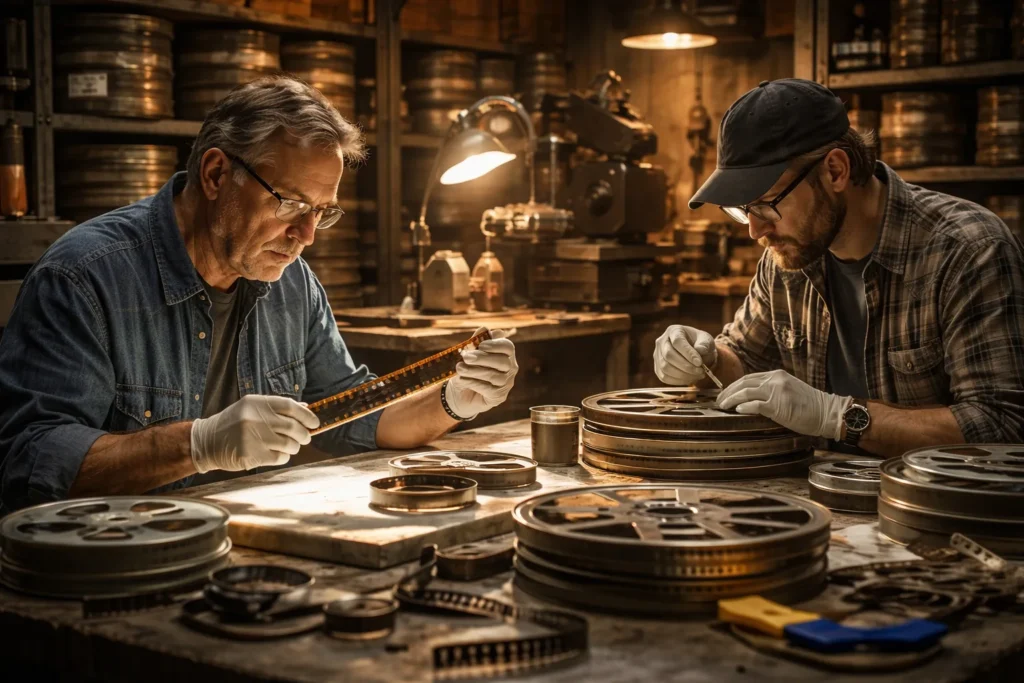
Did you know, a single 35mm film print can last over a century with the right care, or just a few decades without it? The difference comes down to how you store and handle the original film.
Physical film prints degrade over time through scratches, colour fading, and brittleness (some prints we screen are older than the building itself). Each time a reel passes through a projector, it picks up tiny bits of wear. And if the storage conditions aren’t right, the deterioration speeds up dramatically.
Through years of working with archival prints, we’ve built relationships with film archives across the country. Some cinemas source rare 35mm prints for special screenings, and we do the same whenever we can. But getting hold of these reels involves careful negotiation, insurance paperwork, and a promise to handle each one with respect.
So when you watch a restored film on the big screen, you’re seeing the result of this invisible chain of care. Every print that survives exists because someone chose to preserve it rather than let it fade away.
Projection Skills That Modern Multiplexes Have Forgotten
One of the best parts of having skilled projectionists is that they catch problems before they ruin your film. A loose reel, a misaligned lens, or a sound sync issue can all be spotted and fixed in seconds by someone who knows what they’re doing.
And believe it or not, running 35mm projectors requires a completely different skill set from digital projection. You have to thread the film manually, adjust the focus by eye, and watch for reel changeovers so the audience never notices the switch.
Digital projection, on the other hand, is largely automated. You load the file, press play, and the system handles the rest. Because of this shift, the old projection skills are disappearing fast across the industry.
Thankfully, experienced projectionists can hear when something’s wrong before the audience notices anything. A slight wobble in the sound, a faint flicker on screen, or an unusual hum from the equipment all tell a story. These small signals help them protect both the film and your experience of watching it.
And this attention to detail connects directly to the building itself, which also needs constant care.
Maintaining a Building That’s Over 100 Years Old

Most buildings from the 1920s have been demolished or converted into flats, offices, or shopping centres. So the ones still standing as working cinemas need serious attention to stay that way.
Original plasterwork, decorative ceilings, and vintage seating all require constant care and specialist repair. These features weren’t built to last forever, and finding craftspeople who can restore them properly is getting harder every year.
Then there’s the infrastructure. Heating, ventilation, and electrics must all be upgraded without damaging protected heritage features (this is where most historic cinemas lose the battle). One wrong decision during a rewiring job can destroy decades of preservation work in a single afternoon.
From our experience running a century old building, even small jobs become complicated.
Reupholstering seats, for example, means matching fabrics to the original 1920s designs. You can’t just pop down to a local supplier for that. It takes research, sourcing from specialist manufacturers, and sometimes waiting months for the right material to arrive.
All of this effort happens so that when you sit down for a film, the room feels exactly as it should.
Why This Hidden Work Shapes Your Cinema Experience

All this behind-the-scenes effort adds up to something you feel the moment you walk through the doors. But what does that actually mean, though? Well, it shows up in ways you might not consciously notice.
Sound and Comfort You Can Actually Feel
Proper restoration leads to better acoustics, comfortable seating, and an atmosphere that feels genuinely authentic. The sound reaches you clearly from every angle because someone took the time to preserve the original acoustic design.
And the seats support you properly because they’ve been restored with care rather than replaced with cheap alternatives.
Sharper Screens, Fewer Interruptions
The same goes for the projection booth. Well-maintained projectors deliver sharper images and fewer interruptions during screenings, so you get to focus entirely on the film instead of distractions like flickering lights or muffled dialogue.
An Experience Multiplexes Can’t Replicate
Historic theatres that invest in this work create experiences that modern multiplexes simply can’t replicate. The difference shows up in the quality you can actually see, hear, and feel.
When you watch a film in a space that’s been properly looked after, the whole experience shifts. And that connection between building and audience is exactly what makes heritage cinema worth supporting.
Keep the Projector Running: How You Can Support Historic Venues
Now that you know what goes into keeping a vintage cinema alive, here’s how you can help:
- Attending screenings regularly is the most direct way to keep heritage cinemas financially viable, and every ticket helps cover restoration projects, equipment upkeep, and staff wages.
- Membership schemes and donations often fund specific restoration projects directly, and some venues offer exclusive screenings or tours as a thank you.
- Telling friends and family helps attract new audiences who might not know these places exist, and that kind of support keeps these spaces alive for future generations.
We’ve been showing films on Whiteladies Road since 1921, and we’d love to keep going for another century. So next time you’re planning a night out, consider a heritage cinema.
We guarantee you’ll enjoy a better experience while helping preserve a piece of film history.
Related Posts
How Event-Based Screenings Are Changing Cinema Business Models
Most cinemas used to rely on one thing: new film…
Why Classic Cinemas Feel Different From Streaming
Classic cinemas feel different from streaming because the physical environment…
Why Some Films Are Best Watched in a Theatre
Some films are best watched in a theatre because the…