The charm of 35mm projection comes from its small imperfections. These tiny silver halide grains on the film give the image a warm, textured feel, which digital screens cannot easily reproduce.
You’ve probably felt this yourself while watching a recent blockbuster. The images look sharp, and the colours are bright, but it feels a bit lifeless (maybe it looks too clean and perfect). The difference comes from digital projection, lacking the subtle texture that film provides.
So what exactly creates that difference? Is it the lighting, the performances, or how the movie is directed? For many cinema lovers like us, the answer is 35mm projection and its unique visual quality.
In this post, we’ll explain why 35mm projection creates a look that digital formats cannot fully copy. We’ll also explore how film grain and silver halide grains work together to produce something special on screen.
First, we’ll look at what exactly makes these 35mm projections so unique.
35mm Projection: Why It Looks and Feels Different
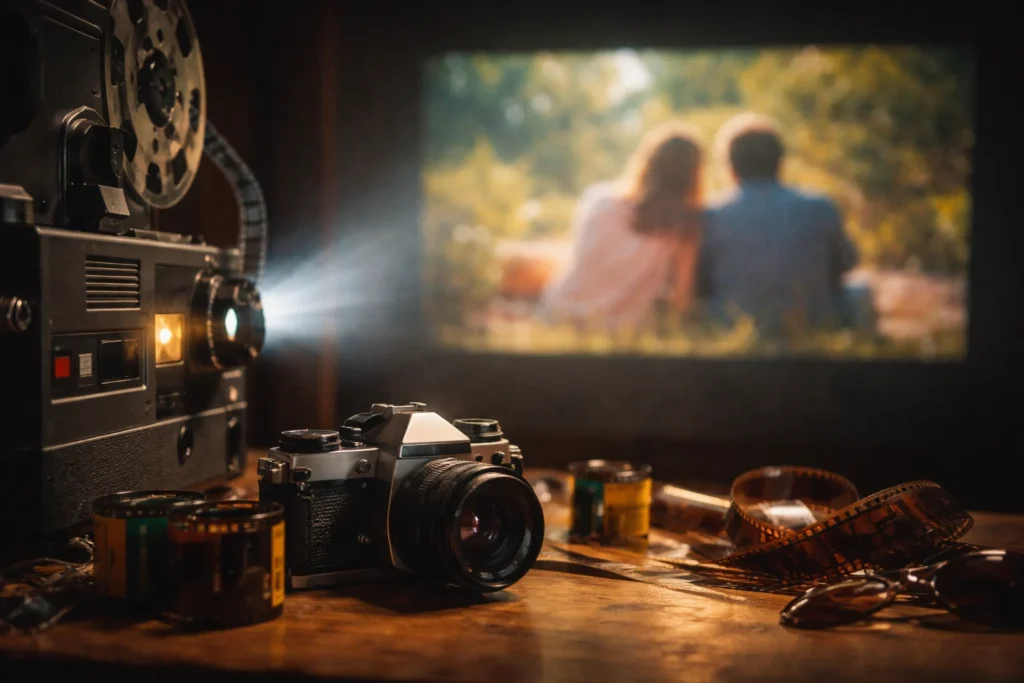
35mm projection looks different because light passes through the film first and scatters it slightly. Unlike the uniform light from digital pixels, this scattering adds depth and warmth, which makes the image feel more natural.
Now let’s look at what makes this format work and why it’s still valuable today.
What 35mm Projection Actually Is
35mm projection uses a reel of celluloid film that runs through a projector at 24 frames per second. Each frame contains a tiny portion of the movie, and a bright light shines through it to project the image onto the screen.
The film itself is made of layers, including a base, an emulsion with silver halide grains, and sometimes a protective coating. As light passes through these layers, it interacts with the grains to create subtle variations in tone and texture.
But digital projection works more like a giant computer reading data files and displaying pixels. So one method is physical, and the other is electronic, and your eyes can feel that difference even if you can’t explain it.
Film Grain and Silver Halide Grains Explained
Film grain comes from tiny silver halide grains that sit in a layer of gelatin on the celluloid strip. When light hits the film during shooting, these grains react and record the image.
But the most interesting thing about these film grains is that each grain reacts slightly differently. So no two frames will ever look the same. This natural randomness is what gives film a texture that digital sensors simply cannot copy on their own.
Texture, Motion, and Light
35mm film also handles light and contrast in its own special way. Bright areas, for instance, fade gently instead of cutting off harshly, and shadows keep their detail without turning into black blobs.
Motion blur also feels smoother because each frame is captured directly on the film (aka a complete photochemical exposure). All of these qualities work together to give film images a depth that many people describe as more alive and less sterile.
Why Digital Still Cannot Fully Replicate Film
As we covered earlier, digital still cannot fully replicate film because it cannot reproduce the natural texture, grain, and light behavior of 35mm celluloid. Even with higher resolution and better color, technologies like 4K and HDR still cannot recreate the random grain patterns or the way light interacts with actual celluloid.
Audiences often respond emotionally to these imperfections. This response actually comes from the physics of film and how human eyes perceive light and detail (not just nostalgia for older technology).
Why Filmmakers Still Prefer 35mm Film Over Digital
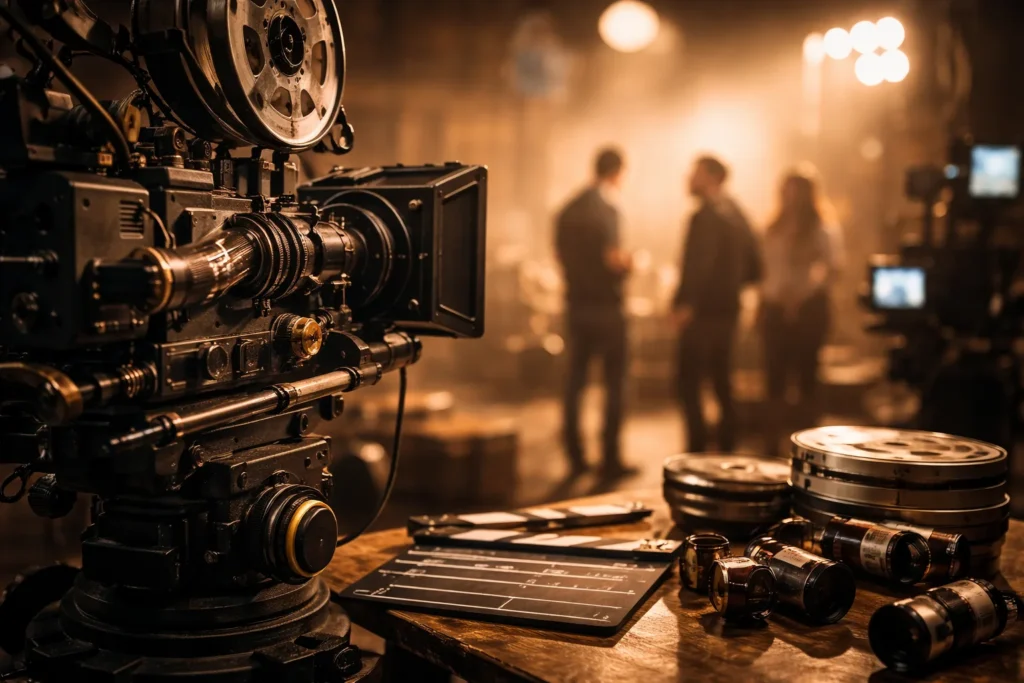
Filmmakers choose film because it requires creative decisions that digital sometimes ignores, like deciding on shot composition and lighting before rolling the camera. The format influences how stories are told, and that careful approach shows on screen in ways audiences can sense.
Here’s why filmmakers keep coming back to 35mm when digital is easier.
Film as an Artistic Constraint
35mm film costs money with every take, and each reel only holds so many minutes of footage (about 10 minutes per reel at standard speed). These limits might sound like drawbacks, but they actually push filmmakers to prepare more carefully.
If you can’t shoot endless takes, every single frame is valued. Because of this, filmmakers plan lighting and performances with more care. This discipline often leads to stronger storytelling, since nothing on screen feels rushed or unnecessary.
Film Grain as Emotional Language
Film grain often creates an emotional response for audiences, even when they think of it only as an aesthetic choice. You’ll notice genres like political thrillers and espionage stories use grain to build tension and make scenes feel realistic.
Think of those Cold War films set in East Germany or stories about a former CIA agent’s search for a lost colleague caught in a deadly conspiracy. The gritty look makes these worlds feel authentic and dangerous. In this way, grain becomes part of the visual language that pulls viewers deeper into the story.
The Role of 35mm in Preserving Movie Heritage
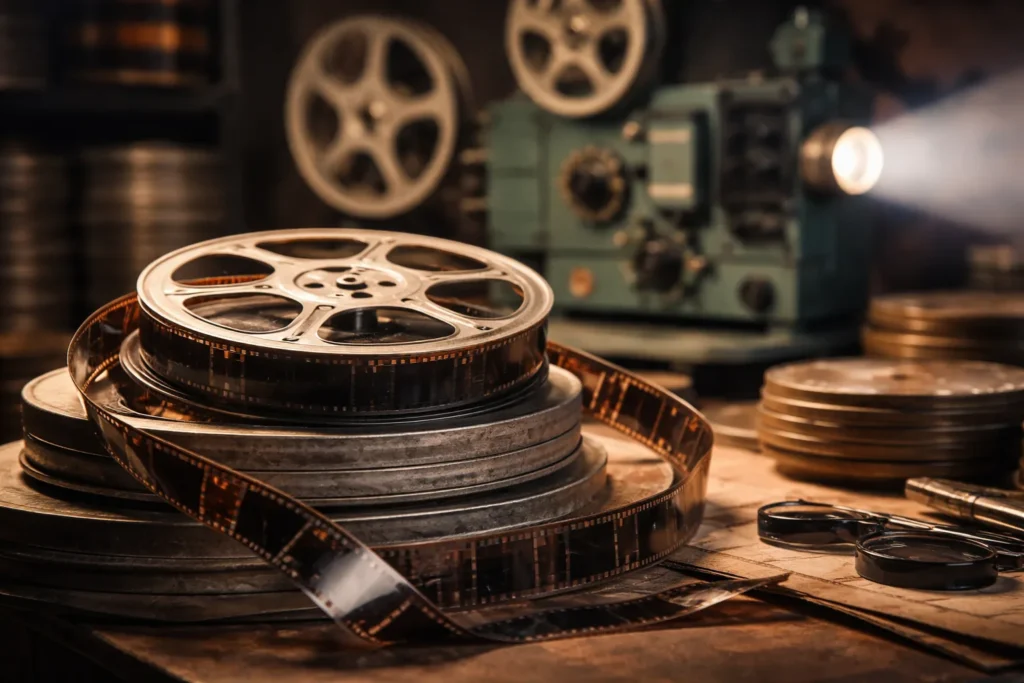
In recent years, you may have felt the value of keeping physical books, games, or other items, since so little truly belongs to us. Well, the same goes for 35mm.
Keeping these 35mm films alive is deeply valuable for movie heritage because digital files can corrupt or become unreadable as technology changes over time. Physical film reels, however, can last well over a century when stored properly.
This means true preservation, which relies on maintaining the original format instead of scanning old prints into digital files. Since so much of cinema’s history exists on celluloid, losing the ability to project it would weaken our connection to that rich past.
The Cinema Experience as a Live Event
Doesn’t watching a 35mm projection feel like a live event? It sure does to us. You hear that gentle whir of the projector in the background, and there’s a subtle flicker that reminds you that something mechanical is happening.
Plus, a real person loads those reels and monitors the screening from start to finish. This human involvement creates a shared experience between the audience and the projectionist, making each showing unique instead of just another playback.
The Enduring Value of 35mm Film for Filmmakers and Audiences
So, have you ever watched a film recently and felt like something about it was different? That warmth you noticed probably came from the very imperfections that make 35mm so special.
Film grain, subtle flicker, and natural contrast all work together to add emotion and realness to every single frame on screen. And as digital projection takes over more cinemas, choosing 35mm has become a bold artistic statement rather than a step backwards into the past.
Watching movies in a traditional cinema also connects us to decades of movie heritage. You get to share the same experience that audiences enjoyed generations ago. This fuller sensory experience reminds us why cinema became such a beloved art form in the first place.
If you love the idea of watching films in a historic cinema with real character, come visit us at Whiteladies Picture House. Our 1921 venue celebrates movie heritage in the heart of Bristol’s Clifton neighbourhood, and we’d love to share that experience with you.
Related Posts

Family Movie Nights: How to Create Magical Memories at the Cinema
Many parents struggle to pull their kids away from tablets…
Why Classic Cinemas Feel Different From Streaming
Classic cinemas feel different from streaming because the physical environment…

The Hidden Work That Keeps Old Cinemas Alive
You've probably watched a film in a beautiful old cinema…