Some films are best watched in a theatre because the scale, sound, and shared audience create an experience you can’t replicate at home.
Think about that thriller that had you gripping your seat, or the epic that felt genuinely overwhelming. When you rewatch those same films on a laptop, something’s missing, and that’s because film immersion depends heavily on where you watch.
We’ve been showing films at our picture house since 1921, so we know what a proper cinema adds to the experience. This guide covers what makes theatre viewing unique, including the role of sound, spectacle, and collective audience reactions.
Let’s start by comparing the two experiences.
What Makes Theatre Viewing Different From Watching at Home
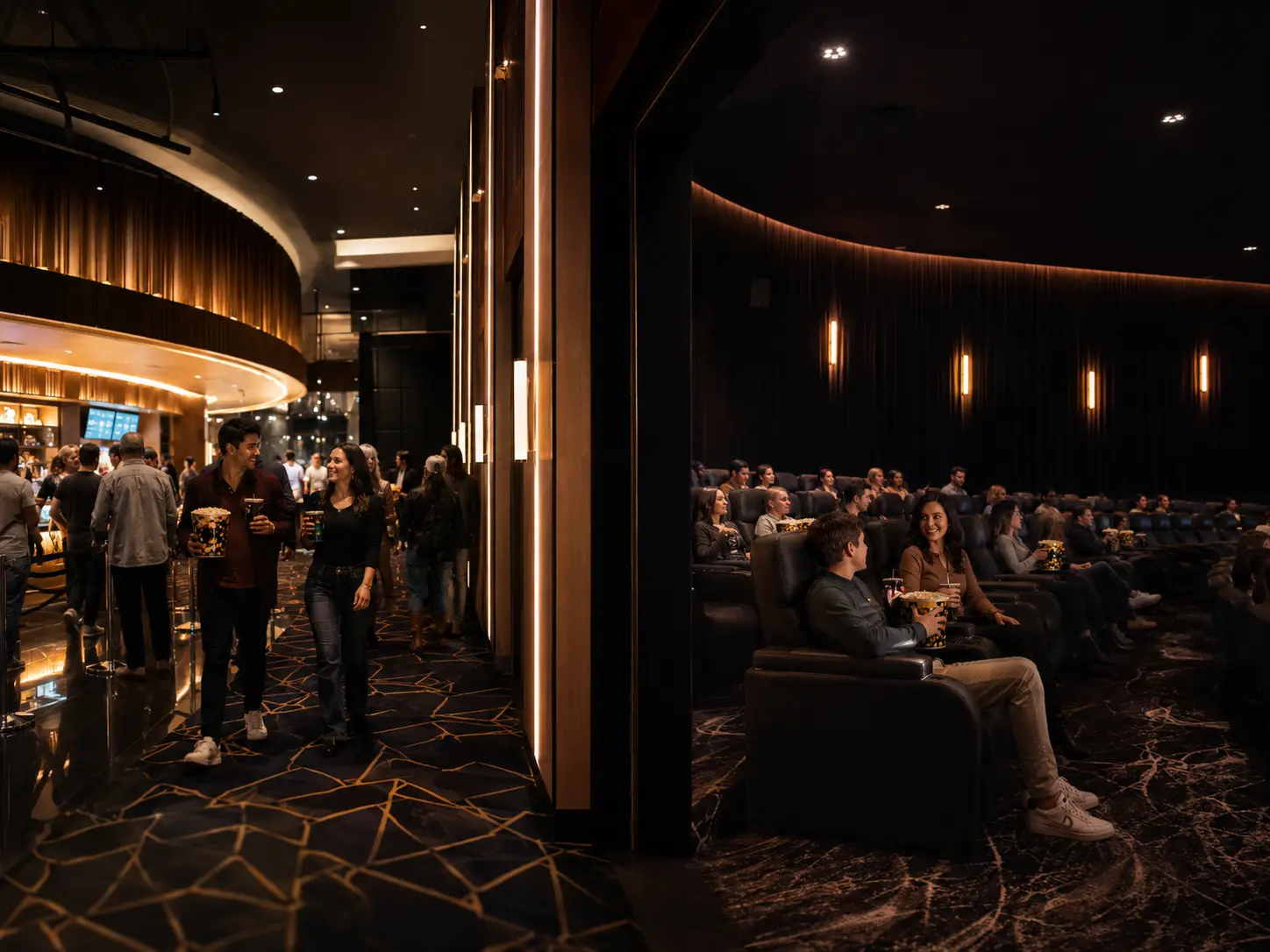
Theatre viewing is different because you’re in a dark room with a massive screen, no distractions, and no option to pause.
That combination forces your brain to focus in a way your living room never allows. The screen fills your entire field of vision, so there’s nowhere else to look. You’re not glancing at your phone or half-watching while someone makes tea in the next room.
Home setups, on the flip side, work against this kind of immersion. Research published in Marketing Letters found that audiences consistently rate the same films higher when they watch them in a cinema (and yes, we’ve all been guilty of checking our phones mid-film at home).
That commitment to staying present, without the option to scroll or wander off, changes how deeply a story pulls you in. You engage differently when you can’t look away, and the film benefits from that focus.
Now, let’s look at another element your home setup struggles to deliver: sound.
How Cinematic Sound Changes the Way You Experience a Film
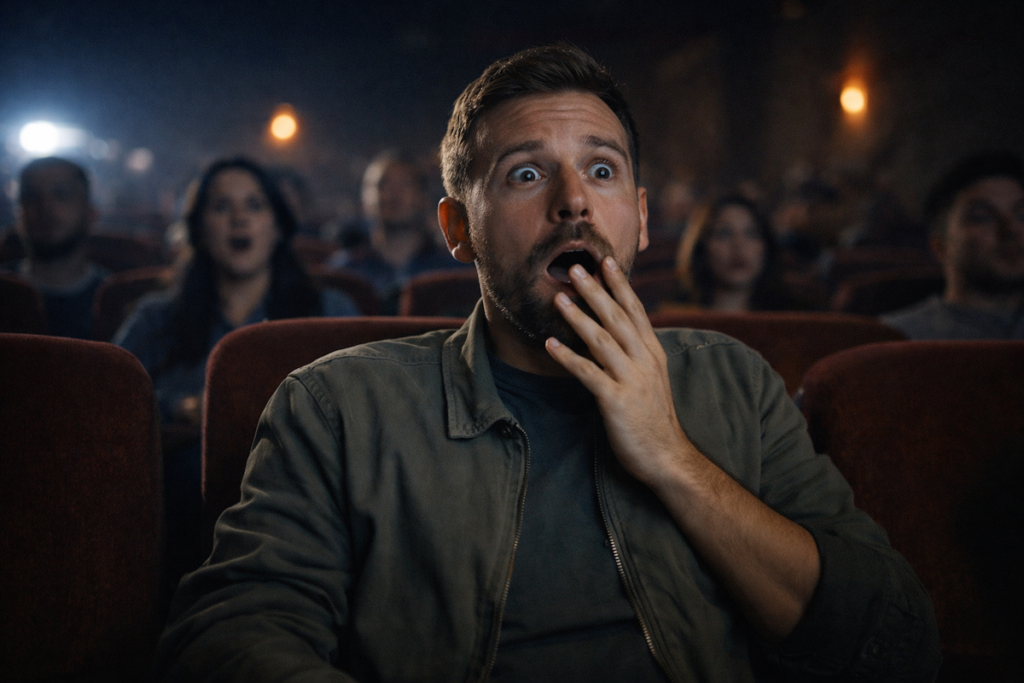
Most cinema sound systems pump out audio at levels and frequencies your home setup physically cannot reproduce. And you don’t just hear it, you feel it. That difference alone changes how a movie builds tension, delivers scares, and lands its emotional beats.
Here’s how that breaks down in practice.
The Bass and Surround You Feel in Your Chest
Cinema speakers deliver bass that vibrates through your seat and chest, creating a physical response to what’s on screen. Subtle details like distant footsteps, whispered dialogue, or a score building quietly in the background all come through with clarity (that’s detail you simply won’t catch on a soundbar).
And once that’s established, the film’s mood wraps around you rather than just playing in front of you.
Why Films Are Mixed for Cinema First
Sound designers mix films for cinema setups first, so home speakers often miss entire layers of audio. We screen a lot of older films here, and the difference in sound detail always catches people off guard. Music, suspense cues, and ambient noise all reveal themselves differently in a proper auditorium.
From there, the focus shifts to another question: which genres benefit most from the big screen?
The Genres That Gain the Most From the Big Screen
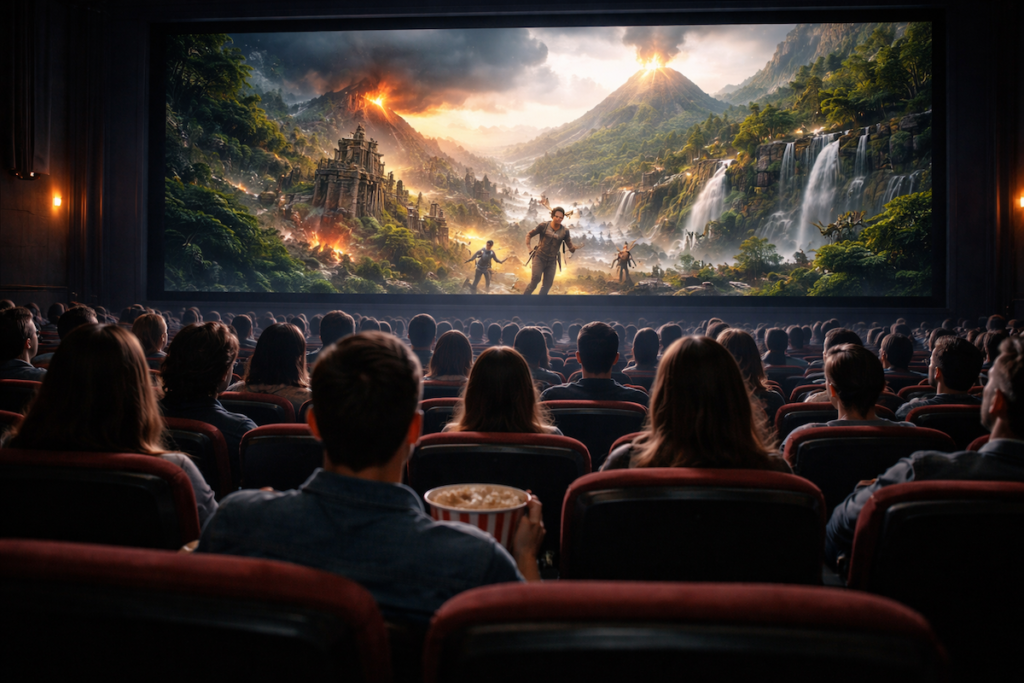
The best part about seeing spectacle films in a cinema is feeling genuinely small in your seat as the visuals tower over you. That sense of scale does something to your brain, and certain genres rely on it more than others.
For instance, epics and sci-fi spectacles like Dune or Interstellar need that overwhelming scale to deliver their full impact. And when the screen stretches beyond your peripheral vision, you stop watching the story and start living inside it.
Now, believe it or not, horror actually benefits just as much from the setting. Thrillers and suspense films use controlled darkness and sudden audio cues to keep you on edge (we’ve seen entire rows jump in unison during a good scare). But at home, you control the lights and the volume, which takes the power away from the director.
Musicals and concert films hit differently, too, especially when the soundtrack fills an entire auditorium rather than bouncing off living room walls.
Why Shared Audience Reactions Add to Movie Impact

Ever noticed how a joke feels funnier when the whole room laughs with you? That’s not just in your head, because hearing an audience gasp, cheer, or burst into laughter actually amplifies your own emotional response to what’s happening on screen.
After years of packed screenings, we’ve also noticed something interesting about how crowds respond. Comedy lands harder when genuine laughter surrounds you, and thrillers build more suspense when you can feel the tension rippling through the room.
The Barbenheimer phenomenon in 2023 showed this on a massive scale, with over 1.5 million people flocking to UK cinemas in a single day during National Cinema Day.
That kind of collective energy creates a lasting impact, one that sticks with you long after the credits roll. You end up remembering not just the film, but the moment you shared it with strangers.
And honestly? That’s the whole point.
True Film Immersion Only Happens in a Cinema
Now that we’ve covered scale, sound, and audience energy, the case for cinema becomes hard to argue against. Screen size, audio quality, and a room full of people all work together to create something your living room cannot. Certain movies were designed for these conditions, and watching them elsewhere means missing what the director intended.
True film immersion requires more than a good TV and a comfy sofa. It needs darkness, scale, and the unpredictable energy of a live crowd. That combination turns a movie night into something you actually remember.
So the next time a big release arrives, consider giving it the theatre treatment it deserves. We’d love to see you at the Whiteladies Picture House for a proper cinema experience.
Related Posts
The Magic of 35mm and Why It Still Matters
The charm of 35mm projection comes from its small imperfections.…
The Hidden Work That Keeps Old Cinemas Alive
You've probably watched a film in a beautiful old cinema…
What Makes a Cinema Feel Like an Experience, Not Just a Screening
Most people walk out of a great cinema and struggle…